

Spring is in full swing and it is slowly becoming clear which branches need to be pruned in order to be shaped into fruit wood.
The olive tree produces flowers and then its fruit on one-year-old wood - so this is a doable task for anyone who has had their olive tree for more than a few months.
Due to the fact that the vegetation starts later here than in the south, it is of course advisable to start pruning the olives a few weeks after the traditional pruning time in Italy.
Towards the end of April, the first fresh shoots are already visible and the dead or weakened wood from the winter is much easier to identify.
Always make the cut on the main trunk or the well-developed branches with the flat side of the cutting tool and cut as close as possible to ensure rapid wound healing.
Prune branches that grow into the crown entirely. They compete too hard for light and, due to the shading, can lead to shoots that require a lot of energy.
The regenerative capacity of an olive tree cannot be compared to that of an apple or cherry tree. The olive tree has no dormant eyes slumbering beneath its surface, so pruning into the old wood is both possible and necessary to maintain its viability.

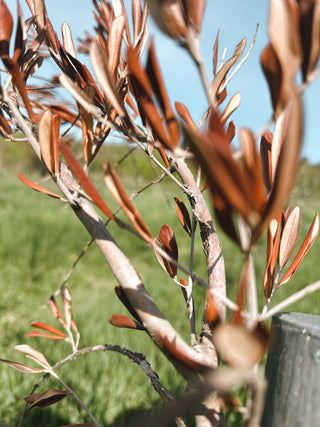
There's no way to help this tree anymore – it's so damaged that it's hard to understand what caused it to die. The leaves are still attached, so it wasn't damaged by frost, but the cracks in the branches suggest that even the mild -4 degrees Celsius didn't agree with it.

This tree survived the winter with minor damage—surprising, given that Grignan was considered one of the most winter-hardy varieties. Nevertheless, it doesn't seem to have harmed its vitality.
![Olea Europaea "Empeltre" – the Catalan newcomer [PRE-ORDER SPRING 2026]](http://pannolio.at/cdn/shop/files/Aglandau-1_63025968-508b-4ba5-923d-3df06a6eea6b.jpg?v=1709023033&width=320)