

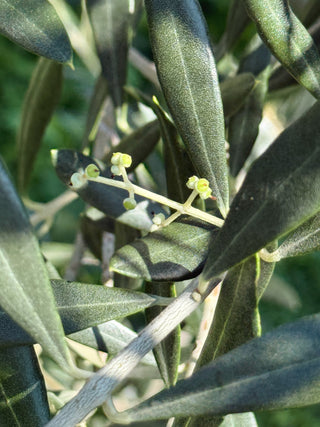
Do you have an olive tree in your garden and notice small, round fruits that just won't grow any bigger? These are called virgin fruits , a fascinating natural phenomenon! These little spheres develop when your tree's blossoms aren't pollinated. In this blog post, we'll explain in simple terms why this happens and give you tips on how to help your olive tree achieve a better harvest.
What are virgin fruits?
Virgin fruits are tiny olives that develop without fertilization. They remain small, often no bigger than a peppercorn, and usually fall off early. This is called parthenocarpy . Such fruits contain no seeds and do not grow into full-fledged olives. But why is your tree producing these little balls?
Why do virgin fruits develop?
There are a few reasons why your olive tree is producing virgin fruit:
1. No or poor pollination
Olive trees often need pollen from another tree to produce fruit. Many varieties are self-incompatible , meaning that the pollen from one tree cannot fertilize its own flowers. If you only have one olive tree in your garden, a suitable pollinator is often missing. The flowers will still try to produce fruit, but only these small virgin fruits will develop.
2. Low genetic diversity
Genetic diversity plays a major role. If your tree doesn't have another variety nearby to pollinate it, fertilization won't occur. Varieties like Leccino or Moraiolo , for example, need a second tree, such as a Pendolino , to bear fruit properly.
3. Weather and environment
The weather could also be to blame. Heavy rain, wind, or cold temperatures during the flowering period (April to June) can prevent pollen from reaching the flowers. Without pollination, parthenocarps develop, or the flowers fall off completely.
4. Stress or nutrient deficiency
A stressed tree, for example due to insufficient water, nutrients, or improper pruning, often fails to produce fully developed fruit. If your tree lacks sufficient energy, it focuses on survival and drops small fruits.
The natural fruit waste
Don't worry if your tree is losing small fruit – that's normal! This fruit drop happens a few weeks after flowering and helps the tree focus its energy on the best fruit. About 15–20% of the fruit will fall off on its own. However, if almost all the fruit remains tiny or falls off, pollination or care could be the problem.
How can you avoid virgin fruit?
To make your olive tree bear more "real" olives, try these tips:
-
Plant a second tree : A second olive tree of a different variety (e.g., Pendolino as a pollen donor) promotes pollination. Self-fertile varieties like Frantoio are less dependent on a partner, but a second tree never hurts.
-
Proper care : Place your tree in a sunny, sheltered spot. Water regularly, but avoid waterlogging. Fertilize in spring with a balanced fertilizer (e.g., containing nitrogen, phosphorus, and potassium).
-
Proper pruning : Prune your tree in late winter or after harvesting, not during flowering. This will preserve the flower buds.
-
Protection from bad weather : In cooler regions like Germany, a sheltered location, e.g. against a house wall, and frost protection in winter help to keep the tree healthy.
Conclusion
Virgin olives are a sign that your olive tree isn't receiving optimal pollination or care. With a second tree, good maintenance, and some attention to the weather, you can increase your chances of a bountiful olive harvest. This way, your garden will not only become a Mediterranean highlight but might soon also provide you with delicious olives!
![Olea Europaea "Empeltre" – the Catalan newcomer [PRE-ORDER SPRING 2026]](http://pannolio.at/cdn/shop/files/Aglandau-1_63025968-508b-4ba5-923d-3df06a6eea6b.jpg?v=1709023033&width=320)